

Heel Pain can ruin the start of your day.
Heel pain is the most common foot complaint we treat at Frisco Foot & Ankle Specialists. In most cases, the cause is plantar fasciitis — inflammation of the thick band of tissue connecting your heel to the base of your toes. The good news: the vast majority of patients recover fully with the right treatment plan, without surgery.
What Does Plantar Fasciitis Feel Like?
The classic sign is a sharp, stabbing pain at the bottom of your heel, worst with the first steps in the morning or after sitting for a long period. It often improves after walking a few minutes, then returns after prolonged standing.
Other heel pain causes we commonly see include:
- Heel spurs — bony deposits on the underside of the heel bone
- Achilles tendinitis — pain at the back of the heel where the tendon inserts
- Stress fractures — especially in active patients or runners
Nerve entrapment (Baxter’s nerve) — often misdiagnosed as plantar fasciitis
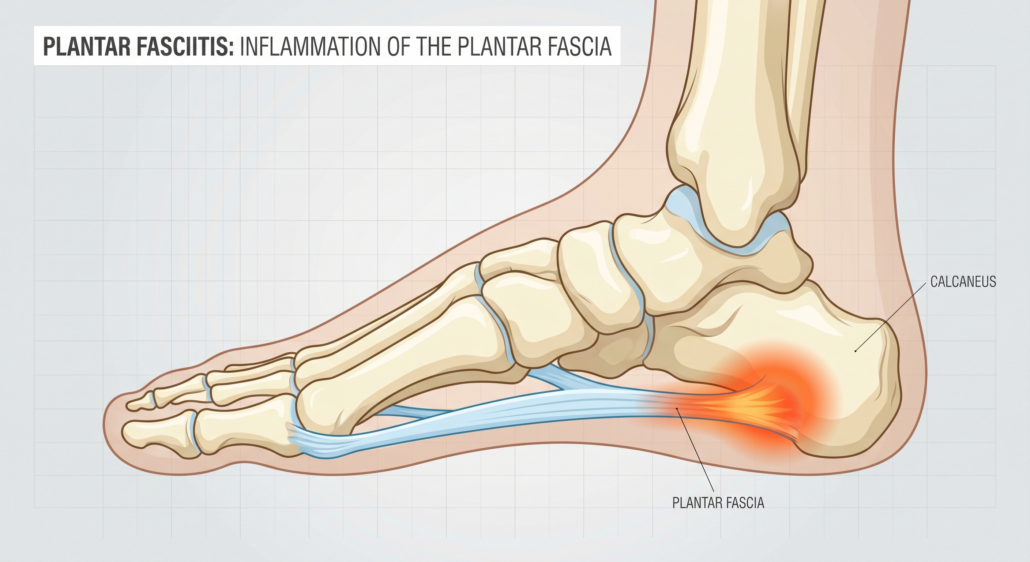
Plantar fasciitis occurs when the fascia band connecting your heel to your toes becomes inflamed.
When Should You See a Podiatrist for Heel Pain?
See a podiatrist if your heel pain has lasted more than 2 weeks, is interfering with your daily activity, or is getting progressively worse. Early treatment produces significantly better outcomes than waiting.
At Frisco Foot & Ankle, we start with a thorough in-office exam and digital X-rays to rule out fractures and bone spurs. From there, most patients begin with conservative care: custom orthotics, physical therapy stretching protocols, anti-inflammatory treatment, and when needed, targeted corticosteroid injections.
Plantar Fasciitis Treatment Options in Frisco, TX
- Custom orthotics — redistributes pressure off the inflamed fascia
- Night splints — holds the foot in a stretched position overnight
- Shockwave therapy (ESWT) — stimulates healing in chronic cases
- PRP injections — uses your own platelets to accelerate tissue repair
- Surgery — reserved for severe, refractory cases only (less than 5% of patients)
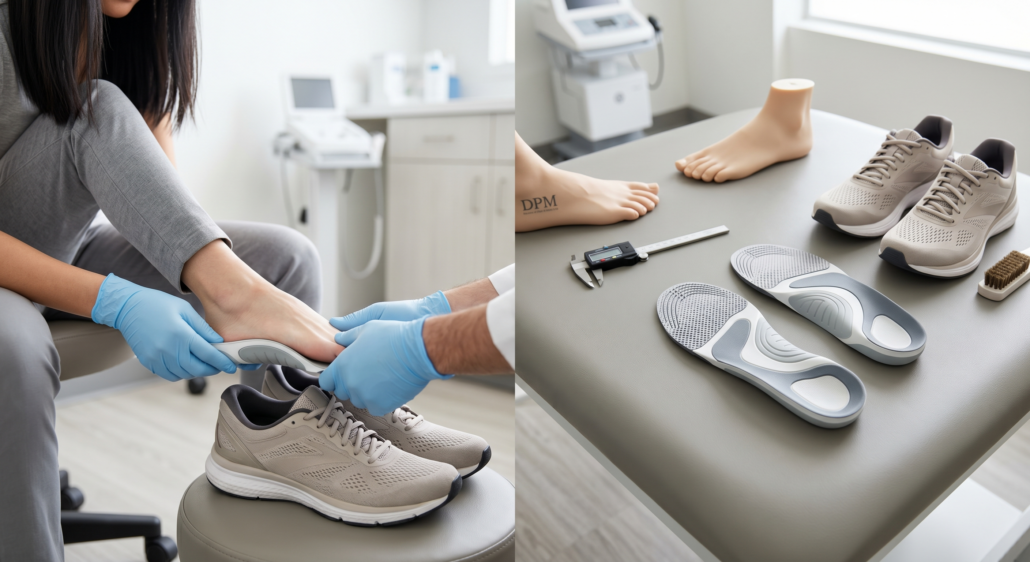
Custom orthotics are one of the most effective tools for relieving plantar fasciitis by correcting the underlying foot mechanic
Frequently Asked Questions About Heel Pain
Q: How long does plantar fasciitis take to heal?
A: With consistent treatment, most patients see significant improvement within 6–8 weeks. Chronic cases may take 3–6 months.
Q: Is it OK to walk on plantar fasciitis?
A: Light walking is generally acceptable, but high-impact activity like running should be modified until pain resolves.
Q: Can heel pain go away on its own?
A: Sometimes, but it often returns without addressing the root cause (foot mechanics, footwear, activity level). A podiatrist can identify and correct the underlying issue.
Q: Does Frisco Foot & Ankle treat heel pain without surgery?
A: Yes — the overwhelming majority of our heel pain patients are treated successfully without surgery using conservative and minimally invasive options.
Frisco Foot & Ankle Specialists treats patients of all ages at 3550 Parkwood Blvd Suite 702, Frisco, TX 75034. Call (972) 559-0051 or book online at friscofoot.com.