
National Diabetes Month Foot Checklist: Daily Checks That Help Prevent Diabetic Foot Problems
November is National Diabetes Month—a good time to turn everyday foot habits into a simple routine. If you live with diabetes in Frisco, Prosper, Celina, McKinney, or Plano, a short daily check can help you spot small problems before they become serious wounds.
This guide is educational, not a personal diagnosis. Follow the care plan you and your medical team set for blood sugar, medicines, and activity. Use the checklist below as a practical companion—and contact a podiatrist promptly if something looks or feels wrong.
Why daily foot checks matter with diabetes
Diabetes can damage nerves (neuropathy) and reduce blood flow to the feet. When feeling is reduced, a blister, cut, or pressure spot may go unnoticed. Poor circulation can also slow healing. The CDC notes that checking your feet every day—even when they feel fine—helps catch issues early, when treatment is usually simpler.
About half of people with diabetes have some form of nerve damage, often in the feet and legs. That is why prevention and early evaluation are central to long-term foot health.
Your diabetic foot care checklist Frisco patients can use every day
Keep this list near the bathroom mirror or phone. It takes a few minutes once it becomes habit.
1. Inspect both feet, top to bottom
- Look for cuts, redness, swelling, sores, blisters, corns, calluses, or nail changes.
- Check between the toes and along the soles and heels.
- Use a hand mirror, phone selfie camera, or ask a caregiver if you cannot see the bottoms of your feet.
2. Wash and dry carefully
- Wash with warm—not hot—water. Do not soak your feet for long periods.
- Dry thoroughly, especially between the toes.
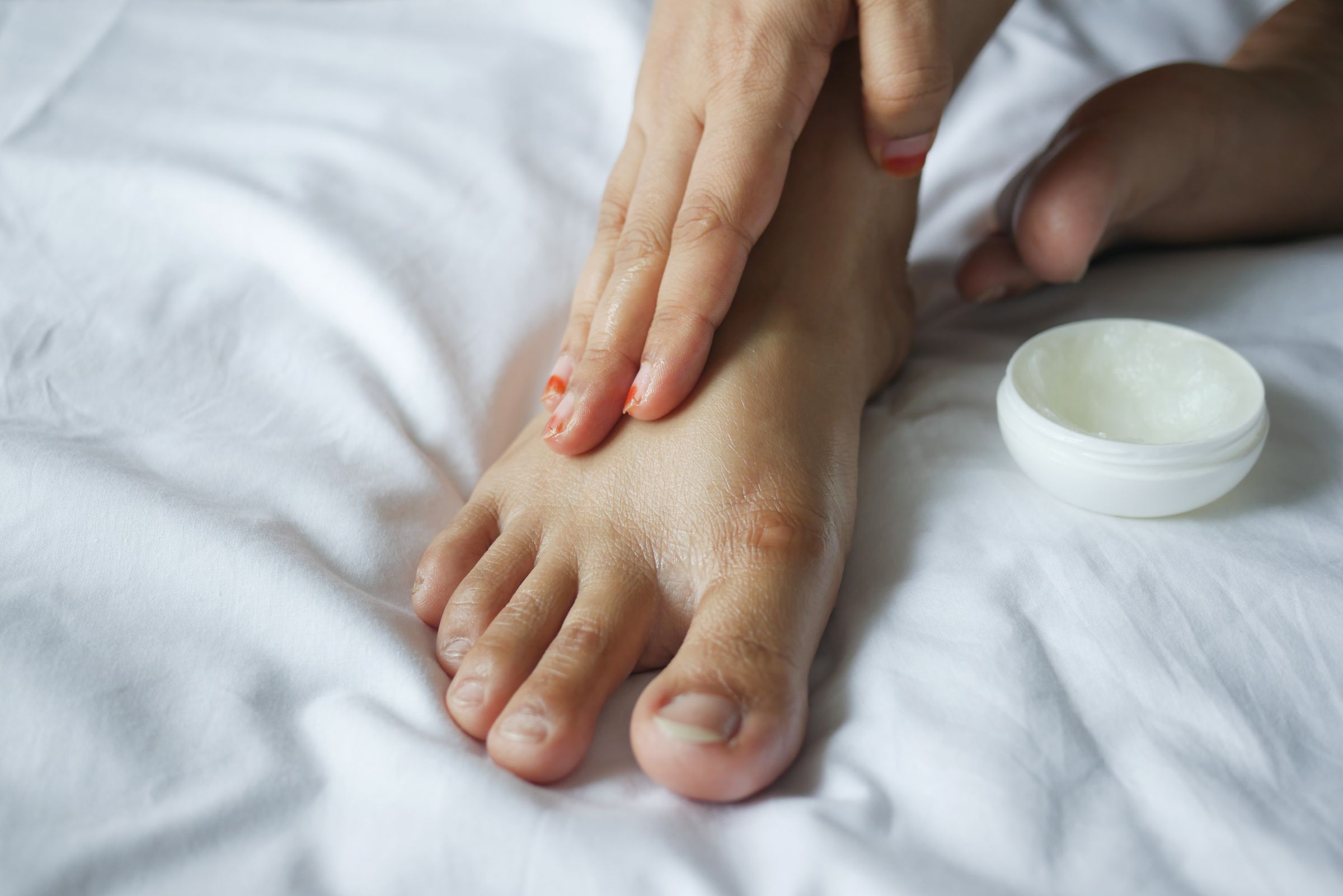
- Moisturize the tops and bottoms of the feet. Skip lotion between the toes, where excess moisture can invite infection.
3. Protect your feet all day

- Never go barefoot indoors or outdoors.
- Shake out shoes and check for pebbles, seams, or rough spots before putting them on.
- Wear socks with shoes; choose pairs that fit without tight bands or bunching.
- Prefer shoes that fit well. Try new pairs later in the day, when feet are slightly larger, and break them in gradually.
4. Care for nails safely
- Trim toenails straight across and gently file sharp edges.
- If you cannot see or reach your feet—or if nails are thick, curved, or painful—ask a podiatrist to trim them.
- Do not cut corns or calluses yourself, and avoid over-the-counter “medicated” removers that can burn skin.
5. Support overall diabetes foot health
- Keep blood sugar in the target range your clinician recommends.
- Do not smoke; smoking reduces blood flow to the feet.
- Choose foot-friendly activity (walking, cycling, or swimming when appropriate) after checking with your doctor.
- Ask for a foot look at primary-care visits, and schedule a complete podiatry exam at least yearly—more often if you have nerve damage or prior foot problems. The CDC includes a complete foot check on the yearly diabetes care schedule.
When to call a podiatrist right away
Do not wait for your next routine visit if you notice:
- A blister, sore, ulcer, infected corn, or ingrown toenail
- Redness, warmth, swelling, drainage, or a foul odor
- Tingling, burning, new numbness, or loss of temperature sensation
- Pain or cramping in the legs with activity
- A change in foot shape, color, or temperature
- Thickened or yellow toenails, or athlete’s foot between the toes that is not improving
If a wound is not improving, deepening, or showing signs of infection, seek care promptly. Our team provides evaluation and treatment for diabetic and other foot wounds—learn more on our foot wound care and treatment page. For broader timing guidance, see when to see a podiatrist in Frisco.
How Frisco Foot & Ankle Specialists can help
At Frisco Foot & Ankle Specialists, Dr. Gary Heredia, DPM and Dr. Morgan Kaplan, DPM, and the care team help patients across Frisco and nearby communities with preventive diabetic foot exams, nail and skin care guidance, and early treatment when problems appear. One office serves the area: 3550 Parkwood Blvd Suite 702, Frisco, TX 75034. Call (972) 559-0051 or request an appointment online.
This National Diabetes Month, treat the checklist as a gift to your future self: a few minutes each day can protect mobility, independence, and peace of mind.






Leave a Reply
Want to join the discussion?Feel free to contribute!